
As of 2026, first-time buyers in BC have more room than they did two years ago. You can access a 30-year amortization on an insured mortgage (up from 25), the insured-mortgage price cap has been raised to $1.5 million, and between the RRSP Home Buyers' Plan ($60,000 per person, tax-free) and the First Home Savings Account ($40,000 lifetime, also tax-free), a couple can put up to $200,000 of tax-sheltered savings toward a down payment. New-build buyers also gained a federal GST rebate worth up to $50,000 in March 2026. None of that changes the fundamentals below — but it does change the math, especially for condo and townhome buyers in this market.
Buying your first home is one of the biggest financial decisions you'll ever make. Whether you're searching for a condo near the SkyTrain, a family-friendly townhouse, or your first detached home, the process can feel overwhelming. The good news is that it doesn't have to be.
At Apex Real Estate Group, we've helped first-time buyers purchase homes throughout Coquitlam, Port Moody, Port Coquitlam, and Burnaby North. Every buyer's journey is different, but the process itself stays largely the same. This guide walks you through every step, explains what's new for 2026, covers the common mistakes to avoid, and shares local insight to help you buy with confidence.
Why So Many First-Time Buyers Choose the Tri-Cities and Burnaby North
These communities continue to attract first-time buyers because they offer an excellent balance of lifestyle, convenience, schools, parks, and long-term value. Whether you're commuting to downtown Vancouver, working locally, or raising a family, you'll find neighbourhoods that fit almost every budget.
Coquitlam offers a wide variety of housing, excellent schools, SkyTrain access, Lafarge Lake, Town Centre Park, Burke Mountain, and one of the fastest-growing city centres in Metro Vancouver. First-time buyers often begin their search in Burke Mountain, Westwood Plateau, Austin Heights, Maillardville, Central Coquitlam, and Ranch Park.
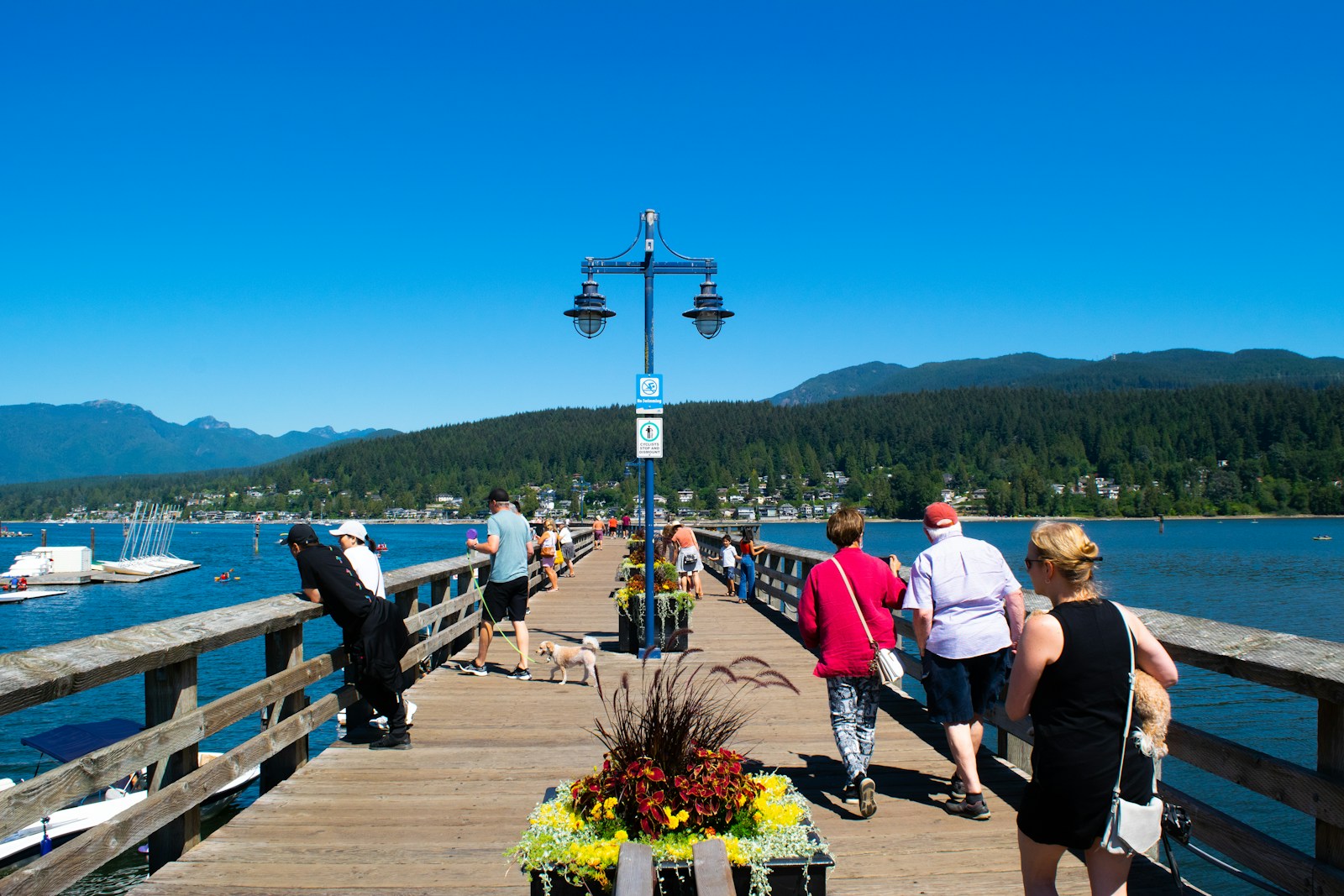
Port Moody, known as the "City of the Arts," combines waterfront living with incredible parks, breweries, Rocky Point Park, and excellent transit access. Popular neighbourhoods include Heritage Woods, Newport Village, Suter Brook, College Park, and Glenayre.
Port Coquitlam continues to offer exceptional value for buyers looking for more space while remaining close to Vancouver. Popular areas include Citadel Heights, Riverwood, Oxford Heights, Lincoln Park, Glenwood, and Mary Hill.
Burnaby North has become one of Metro Vancouver's most desirable locations thanks to Simon Fraser University, Brentwood Town Centre, excellent transit, and strong long-term appreciation. Neighbourhoods worth considering include Brentwood, Capitol Hill, The Heights, Montecito, Government Road, Sperling/Duthie, and Westridge.
What's New for First-Time Buyers in 2026
This is the part of the process that changes the most from year to year — and the part most first-time buyer guides get stale on fastest. Here's what's actually in effect right now.
The insured-mortgage price cap is $1.5 million. As of December 15, 2024, the ceiling for CMHC-insured mortgages rose from $1 million to $1.5 million for first-time buyers and new-construction purchases. That matters directly in this market: it means buyers here can now put down less than 20% on homes priced well above where that used to be possible. Note this higher cap applies to first-time buyers and new builds specifically — repeat buyers purchasing resale homes are still capped at $1 million for insured financing.
Down payment minimums are tiered. For an insured mortgage, the minimum down payment is 5% on the portion of the price up to $500,000, and 10% on the portion between $500,000 and $1.5 million. Above $1.5 million, CMHC insurance isn't available at all, and a minimum 20% down payment applies. As an illustration: on a $1,300,000 detached home, the minimum insured down payment works out to roughly $105,000 (5% of the first $500,000, plus 10% of the remaining $800,000) — about 8% of the purchase price, not 20%.
30-year amortizations are back for first-time buyers. Insured mortgages were capped at 25 years for most of the past decade. As of the same December 2024 reforms, first-time buyers can access a 30-year amortization on an eligible insured purchase (new or resale), and buyers of newly built homes can access it regardless of buyer status. It comes with a small premium surcharge, but it lowers the monthly payment — worth running past your mortgage broker either way.
The First-Time Home Buyers' GST/HST Rebate is brand new. This federal rebate received Royal Assent on March 12, 2026, and offers eligible first-time buyers of new-build homes up to $50,000 back. It's administered by the CRA rather than CMHC and applies only to new construction — presale condos and new-build townhomes in Burke Mountain, Coquitlam Centre, and similar areas could qualify.
The RRSP Home Buyers' Plan (HBP) limit is $60,000 per person. You can withdraw up to $60,000 tax-free from your RRSP toward a first home (a couple who both qualify can combine for $120,000), and repay it back into your RRSP over 15 years, starting in the second year after withdrawal. Miss a scheduled repayment and that year's amount simply gets added to your taxable income — it isn't a debt collector situation, but it does cost you the tax shelter.
The First Home Savings Account (FHSA) is worth opening early even if you're years away. Introduced in 2023, the FHSA lets you contribute up to $8,000 per year, to a $40,000 lifetime maximum. Contributions are tax-deductible like an RRSP, and — unlike the HBP — qualifying withdrawals are completely tax-free with no repayment required. The HBP and FHSA can be combined for the same home purchase, which is how a couple can realistically stack up to $200,000 in tax-advantaged savings toward a down payment.
The federal Home Buyers' Amount tax credit is a smaller but easy-to-miss benefit — a non-refundable credit worth up to roughly $1,500 that most first-time buyers can claim on the tax return for the year they buy.
What This Means for BC's Property Transfer Tax
Every home purchase in BC triggers the Property Transfer Tax (PTT), calculated as 1% on the first $200,000 and 2% on the remainder up to $2 million (with higher marginal rates above that). First-time buyers get real relief here, but it's worth knowing exactly where the lines fall:
Full PTT exemption on a qualifying home with a fair market value up to $835,000.
Partial exemption phasing out between $835,000 and $860,000, reaching zero above that.
A separate program — the newly built home exemption — offers a full exemption up to $1,100,000 and a partial exemption up to $1,150,000 for qualifying new construction. You can't stack both programs on the same purchase; your notary or lawyer will apply whichever saves you more.
The practical read for this market: a condo or townhome purchase in the Tri-Cities or Burnaby North frequently falls under these thresholds and can qualify for a full or partial exemption — an immediate savings of up to roughly $17,200. A detached home purchase in Coquitlam, Port Moody, or Burnaby North, where benchmark detached prices are well above $1.1 million, generally will not qualify for either exemption. That gap is one more reason condo and townhome buyers often see this market differently than detached buyers do.
A necessary caveat: none of the above is financial, legal, or tax advice. Program rules, thresholds, and eligibility criteria change, and your specific situation (income, existing RRSP room, marital status, whether you've owned property before) affects what actually applies to you. Confirm current details with a mortgage broker, accountant, and your real estate lawyer or notary before you rely on any of these numbers.
Step 1: Know Your Budget
Before viewing homes, determine what monthly payment fits comfortably within your lifestyle. Don't simply buy what the bank approves. Consider:
Mortgage payments
Property taxes
Home insurance
Strata fees
Utilities and maintenance
Parking costs
Emergency savings
Buying comfortably is far more important than buying at your maximum approval.
Step 2: Get Mortgage Pre-Approval
A mortgage pre-approval helps you understand your real budget, lock in a rate, strengthen your offer, and shop with confidence. Many sellers take pre-approved buyers more seriously — in a market where financing conditions matter to a seller's certainty, a solid pre-approval is a genuine negotiating asset. With current five-year fixed rates generally landing in the low-to-mid 4% range and the Bank of Canada's overnight rate holding steady through mid-2026, a pre-approval also locks in some predictability while you shop.
Step 3: Save Your Down Payment
Many buyers believe they need a 20% down payment. In reality, as outlined above, many first-time buyers purchase with far less — as little as 5% on the first $500,000 of an insured mortgage. A mortgage professional can walk through what's realistic given your purchase price, your RRSP and FHSA balances, and your overall financial picture.
Step 4: Understand Closing Costs
Don't forget to budget for:
Legal or notary fees
Home inspection
Property Transfer Tax (net of any exemption you qualify for)
Title insurance
Utility connections and moving expenses
Adjustments (property tax and strata fee prorations)
Planning ahead eliminates surprises at the closing table.
Step 5: Start Looking at Homes
Every property should be evaluated for more than just appearance. Think about:
Commute time
Future resale value
School catchments
Nearby parks
Walkability and transit access
Development happening nearby
Future growth in the area
Paint colours can be changed. Location cannot.
Step 6: Make an Offer
Your REALTOR® will help determine an appropriate offer price, the right subject clauses, deposit amount, and completion dates, along with the negotiation strategy for that specific property. Every property requires a different approach — what works in a multiple-offer situation on a Burke Mountain townhome looks nothing like what works on a slower-moving Central Coquitlam detached listing.
Step 7: Complete Your Due Diligence
This usually includes a home inspection, final financing approval, reviewing strata documents (for condos and townhomes), the Property Disclosure Statement, and a title review. These steps protect you before your purchase becomes firm and legally binding.
Step 8: Remove Subjects
Once everything has been approved and reviewed to your satisfaction, you'll remove your subject conditions and move toward completion.
Step 9: Completion Day
Your lawyer or notary transfers ownership and registers the property in your name at the Land Title Office.
Step 10: Possession Day
You receive the keys. Congratulations — you're officially a homeowner.
Common First-Time Buyer Mistakes
Waiting for the "perfect" market. No one consistently predicts the market. Successful buyers focus on purchasing the right property for their long-term goals rather than trying to perfectly time interest rates or prices.
Buying based on emotion. Beautiful staging doesn't always equal good value. Look beyond cosmetic finishes to the bones of the home.
Ignoring monthly ownership costs. Mortgage payments are only one part of home ownership. Budget for the complete picture — strata fees, insurance, utilities, and maintenance all add up.
Skipping professional advice. The cheapest decision today can become the most expensive one later. This applies as much to skipping a proper mortgage broker consultation as it does to skipping the home inspection.
Leaving free money on the table. It's a genuinely common mistake in 2026 specifically: buyers who don't open an FHSA early enough to build meaningful room, or who don't realize a condo purchase might qualify for a full PTT exemption, or who assume they need 20% down and never explore the insured-mortgage path.
Frequently Asked Questions
Is Coquitlam a good place to buy your first home? Yes. Coquitlam offers excellent schools, extensive parks, SkyTrain access, shopping, recreation, and a wide range of housing options. It remains one of the most popular communities for first-time buyers in Metro Vancouver.
Is Port Moody worth the higher prices? Many buyers believe so. Port Moody offers waterfront living, excellent restaurants, Rocky Point Park, breweries, and convenient transit while maintaining a strong community atmosphere.
Is Port Coquitlam more affordable? In many cases, yes. Buyers often find larger homes or townhouses for less than comparable properties in neighbouring communities.
Is Burnaby North a good investment? Burnaby North continues to benefit from rapid redevelopment, excellent transit, Simon Fraser University, Brentwood Town Centre, and strong long-term buyer demand.
Should I buy now or wait? No one can predict exactly what the market will do next. The better question is whether buying now aligns with your financial goals, lifestyle, and long-term plans. Real estate should generally be viewed as a long-term investment rather than a short-term market prediction.
How much money can a first-time buyer actually access from government programs in 2026? Between the RRSP Home Buyers' Plan ($60,000 per person, tax-free) and the FHSA ($40,000 lifetime, tax-free), a couple could theoretically access up to $200,000 in tax-advantaged savings toward a down payment, plus BC's PTT exemption (up to roughly $17,200 in savings on a qualifying purchase) and, for new builds, the new federal GST rebate (up to $50,000). Few buyers will max out every program simultaneously, but stacking two or three of them is common and worth planning for early.
Do I need 20% down to buy in Coquitlam, Port Moody, or Port Coquitlam? Not necessarily. As a first-time buyer, you can use an insured mortgage on purchases up to $1.5 million with as little as 5% down on the first $500,000 and 10% on the remainder. Above $1.5 million, or without insurance, the minimum is 20%.
What's the difference between the FHSA and the RRSP Home Buyers' Plan? The FHSA is money you contribute specifically to save for a first home — contributions are tax-deductible and qualifying withdrawals are entirely tax-free, with no repayment required. The HBP lets you pull from RRSP savings you may have already built for retirement, but that amount has to be repaid back into your RRSP over 15 years. Most mortgage brokers suggest maximizing the FHSA first, since it never needs to be paid back, then using the HBP for any additional funds needed.
Why Work With Apex Real Estate Group?
Buying your first home should be exciting, not stressful. At Apex Real Estate Group, we guide buyers through every step of the process, from mortgage preparation and neighbourhood selection to negotiations, inspections, and possession day. Whether you're buying in Coquitlam, Port Moody, Port Coquitlam, or Burnaby North, our goal is simple: to help you make informed decisions, avoid costly mistakes, and purchase the right home with confidence.
If you're thinking about buying your first home, or simply want to understand your options, we'd be happy to answer your questions — no pressure, no obligation.
Colin Colpitts, PREC Apex Real Estate Group Royal LePage Sterling Realty
This guide reflects federal and BC program rules understood to be in effect as of July 2026, including the December 2024 CMHC reforms (the $1.5M insured cap and 30-year amortization), current FHSA and RRSP Home Buyers' Plan limits, BC's Property Transfer Tax first-time buyer and newly built home exemptions, and the federal GST/HST New Home Rebate that received Royal Assent in March 2026. Program thresholds and eligibility rules change and can vary by individual circumstance. This article is general information only, not financial, legal, or tax advice — confirm current details with a licensed mortgage broker, accountant, and your real estate lawyer or notary before making decisions based on the figures above.
 The data relating to real estate on this website comes in part from the MLS® Reciprocity program of either the Greater Vancouver REALTORS® (GVR), the Fraser Valley Real Estate Board (FVREB) or the Chilliwack and District Real Estate Board (CADREB). Real estate listings held by participating real estate firms are marked with the MLS® logo and detailed information about the listing includes the name of the listing agent. This representation is based in whole or part on data generated by either the GVR, the FVREB or the CADREB which assumes no responsibility for its accuracy. The materials contained on this page may not be reproduced without the express written consent of either the GVR, the FVREB or the CADREB.